Megaloblastic anemia
Abnormally large red blood cells that don’t function properly: fatigue, weakness and shortness of breath.


MyFolate analyzes genetic variants that determine how your body metabolizes folate (vitamin B9), an essential nutrient for DNA synthesis, cellular repair and disease prevention.
Folate (vitamin B9) is essential for DNA synthesis, cellular repair and cell division. But each person’s ability to metabolize it depends on their genetics.
Genes such as MTHFR encode key enzymes in the folate metabolic pathway. Variants in these genes can reduce the ability to convert folate into its active form, causing a functional deficiency even with adequate intake.
MyFolate identifies these variants to personalize supplementation and help prevent diseases associated with deficiency.
A genetically compromised folate metabolism can increase the risk of various conditions, from anemia to pregnancy complications.
Abnormally large red blood cells that don’t function properly: fatigue, weakness and shortness of breath.
Folate deficiency raises blood homocysteine, an independent risk factor for cardiovascular disease.
Folate is needed to produce serotonin and dopamine. Its deficiency is associated with a higher risk of depression.
Increased risk of cognitive decline and dementia in older adults due to sustained folate deficiency.
Neural tube defects (spina bifida), low birth weight, preterm birth and other obstetric complications.
Some people have an active folate deficiency despite an adequate diet, due to genetic variants that reduce enzymatic conversion.
MyFolate analyzes genetic variants in the key enzymes of the folate metabolic pathway.
Central enzyme in converting folate to its active form (5-MTHF). The C677T and A1298C variants reduce its activity and are the most prevalent in the population.
Converts dihydrofolate (DHF) into tetrahydrofolate (THF), the first activation step of dietary folate within the cell.
Involved in the remethylation of homocysteine to methionine. Variants in these genes raise homocysteine and reduce SAM availability.
MyFolate has been designed as a diagnostic tool for nutrition professionals, but it is also useful for anyone who wants to understand how their genetics affects folate metabolism.
It allows for more precise personalization of nutritional plans, increasing the effectiveness of supplementation and reducing the risk of diseases associated with vitamin B9 deficiency.
Collect a saliva sample with the kit. Painless, no fasting and no prior preparation required.
Variants in folate pathway genes are analyzed using high-precision technology.
Results by enzyme: metabolic activity, deficiency risk and homocysteine profile.
Recommended folate type, personalized dosage and nutritional adjustments tailored to your genetics.
The report details the activity of each enzyme analyzed, the risk of functional deficiency and personalized recommendations.
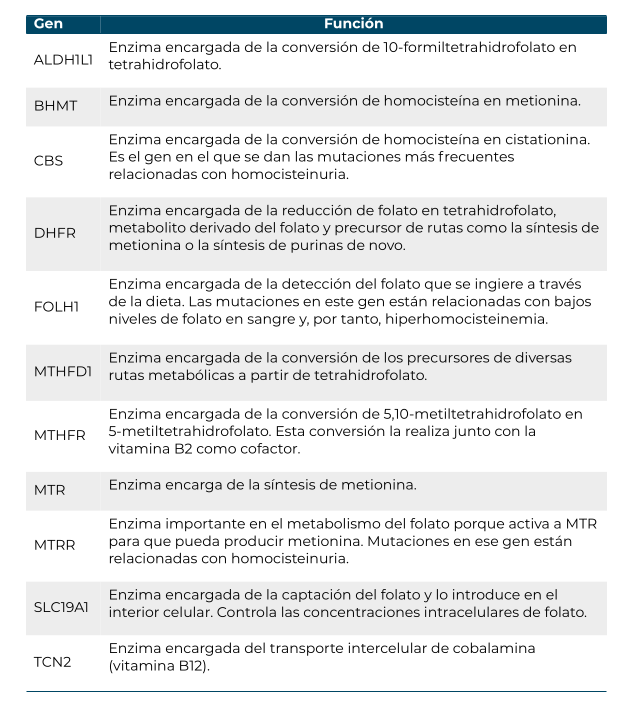
It analyzes genetic variants in key enzymes of the folate metabolic pathway, such as MTHFR (C677T, A1298C), DHFR, MTR and MTRR. These variants determine your body’s ability to convert folate into its active form and use it in essential processes such as DNA synthesis and methylation.
Folate (vitamin B9) is an essential nutrient for DNA synthesis and repair, cell division, neurotransmitter production (serotonin, dopamine) and homocysteine metabolism. Its deficiency is associated with megaloblastic anemia, cardiovascular risk, depression, cognitive decline and pregnancy complications.
Serum folate levels can vary depending on recent diet and don’t reflect the genetic capacity to metabolize it. MyFolate explains why some people have a functional deficiency even with an adequate intake: MTHFR variants can reduce enzymatic activity by up to 70% in homozygosity.
At nutritionists and healthcare professionals who want to personalize nutritional plans, women planning a pregnancy (preconception supplementation with the correct form of folate is key), and anyone with fatigue, anemia or elevated homocysteine levels.
Folic acid is the synthetic form of folate that needs to be converted to 5-MTHF by the MTHFR enzyme. People with MTHFR variants may have difficulty with this conversion and benefit from supplementing directly with methylfolate (5-MTHF), the biologically active form. MyFolate indicates which form is best suited to your genetic profile.
No. The genetic profile doesn’t change throughout life. It is performed only once.
Yes. DNA is obtained from a saliva sample, with no pain or prior preparation. Suitable for anyone of any age.
Discover how your genetics affects vitamin B9 and personalize your nutrition with information based on your DNA.