Myi4 genetic test
4 food intolerances, a single genetic test
Myi4 is the only genetic test that analyzes the predisposition to gluten (celiac disease), lactose, fructose and histamine in a single analysis. It identifies the real origin of your digestive symptoms from your DNA.
4Intolerances analyzed in a single test
Non-invasiveSaliva sample, painless
OnceYour genetics don’t change
20 daysResults after receipt
Genetics shapes your diet
Why a genetic intolerance test?
The symptoms of gluten, lactose and fructose intolerances are very similar. Histamine intolerance presents even more varied symptoms that make it harder to identify.
Genetic analysis makes it possible to determine the real origin of the symptoms in order to treat them in a personalized and effective way. Early diagnosis could even prevent the onset of symptoms through an appropriate diet.
Common symptoms Myi4 helps explain
Abdominal pain
Diarrhea
Bloating
Gas
Migraines
Chronic fatigue
Overweight
Skin problems
Joint pain
Anemia
Irritability
Four intolerances, one analysis
What Myi4 analyzes
Each intolerance has a specific genetic basis. Myi4 analyzes the risk markers for all four in a single test.
Intolerance 1
Celiac disease (gluten)
An autoimmune condition with a genetic predisposition, determined by HLA system alleles. It causes an adverse reaction to gluten that damages the intestinal villi, causing nutrient malabsorption, malnutrition and intestinal problems.
HLA-DQA1
HLA-DQB1
Intolerance 2
Lactose intolerance
Caused by a lactase deficiency (hypolactasia) that is acquired with age. When the activity of this enzyme is low, lactose is not properly digested, causing abdominal pain, flatulence and diarrhea. Lactase loss is genetically determined.
MCM6
Intolerance 3
Fructosemia (fructose intolerance)
A genetic disease caused by a deficiency of aldolase B, the enzyme that metabolizes fructose. It prevents the proper digestion of foods containing fructose, sucrose or sorbitol. Consuming them can cause severe hypoglycemia and liver and kidney failure.
ALDOB
Intolerance 4
Histamine intolerance
Caused by the body’s inability to break down histamine, which accumulates and causes very varied symptoms: gastrointestinal, respiratory, cardiovascular, cutaneous and nervous system. Its breakdown depends on the DAO and HNMT enzymes.
AOC1
HNMT
Genes analyzed
6 genes, 4 intolerances
Myi4 analyzes the scientifically validated genetic markers for each intolerance.
Lactose
Lactase persistence
Histamine
DAO and HNMT enzymes
Who is it aimed at?
For professionals and patients
Myi4 is recommended for professionals whose patients present gastrointestinal symptoms of unknown cause, and for anyone with a suspected food intolerance.
Indication contexts
- Chronic gastrointestinal symptoms with no clear diagnosis
- Clinical suspicion of gluten, lactose, fructose or histamine intolerance
- Family history of celiac disease
- Migraines, fatigue or skin problems of unknown origin
- Personalization of nutritional plans in clinical practice
- Early detection in children with digestive symptoms
How it works
From DNA to a personalized diet
Sample collection
Collect a saliva sample with the kit. Painless, no fasting and no prior preparation required.
Genetic analysis
The 6 genetic markers associated with the 4 food intolerances are analyzed.
Personalized report
Results by intolerance: presence or absence of risk markers and level of predisposition.
Adapted diet
With the results, the professional can design a truly personalized diet that avoids problematic foods.
Myi4 Report
Your genetic food intolerance profile
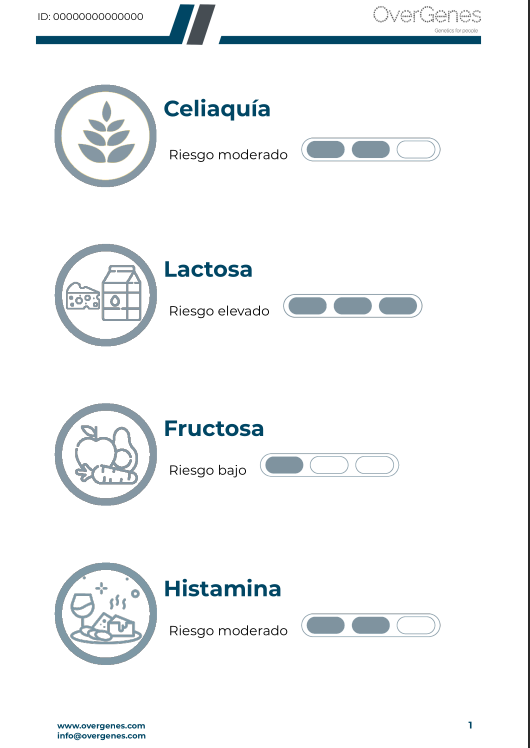
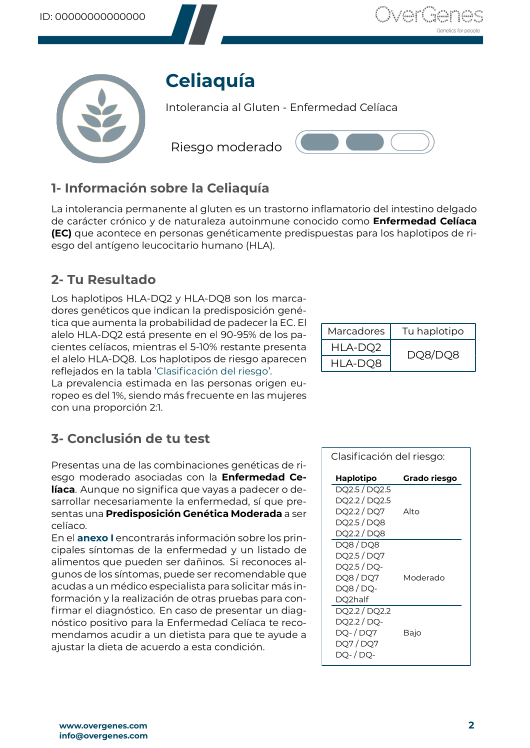
The report details the presence or absence of risk markers for each of the 4 intolerances, with clinical interpretation.
- Genetic risk of celiac disease: HLA-DQ2 and HLA-DQ8 alleles
- Lactase persistence or non-persistence
- ALDOB mutations: risk of fructosemia
- DAO and HNMT enzymatic activity: predisposition to histaminosis
Frequently asked questions
Frequently asked questions about Myi4
What intolerances does Myi4 analyze?
It analyzes the genetic predisposition to four food intolerances: celiac disease (permanent gluten intolerance, via the HLA-DQA1 and HLA-DQB1 alleles), lactose intolerance (lactase non-persistence, MCM6 gene), hereditary fructose intolerance or fructosemia (ALDOB gene), and histamine intolerance (AOC1 and HNMT genes).
Why analyze all 4 intolerances together?
The symptoms of gluten, lactose and fructose intolerances are very similar: abdominal pain, diarrhea, bloating, gas. Histamine intolerance can also cause respiratory, cardiovascular and skin symptoms. Analyzing them together makes it possible to identify the exact origin of the symptoms and avoid incorrect or incomplete diagnoses.
What is celiac disease?
It is an autoimmune condition with a genetic predisposition, determined by alleles of the HLA system. Gluten (present in wheat, rye and barley) triggers a reaction that damages the intestinal villi, causing nutrient malabsorption. The absence of the HLA-DQ2 and HLA-DQ8 alleles makes celiac disease highly unlikely.
What is histamine intolerance?
It is a condition caused by the body’s inability to break down histamine, which accumulates and causes very varied symptoms (gastrointestinal, respiratory, cardiovascular, cutaneous and neurological). The DAO and HNMT enzymes are responsible for its breakdown, and genetic variants can reduce their activity.
Who is it aimed at?
At healthcare professionals whose patients present gastrointestinal symptoms of unknown cause, and at people with a clinical suspicion of lactose, fructose, gluten or histamine intolerance, or with a family history of food intolerances.
Does it replace a challenge test or biopsy?
It doesn’t replace clinical tests, but complements them. The genetic test identifies the permanent predisposition (which doesn’t change with diet or age), while clinical tests measure the current response. Together they enable a more complete diagnosis.
Does the test need to be repeated?
No. The genetic profile doesn’t change throughout life. It is performed only once.
Myi4 · Overgenes
Discover the genetic origin of your intolerances
Gluten, lactose, fructose and histamine analyzed in a single test for early detection and a truly personalized diet.