Dopamine
A key neurotransmitter in motivation, pleasure, reward and the ability to concentrate. Variants in its pathways affect behavior and decision-making.


MyNeuro analyzes genetic variants related to the main neurotransmitters and biological processes that influence brain function, mood and stress response.
Neurotransmitters — dopamine, serotonin, GABA, endocannabinoids — regulate mood, sleep, motivation, stress response and emotional balance.
Genetics influences how these neurotransmitters are produced, transported and metabolized. MyNeuro analyzes that predisposition to help you better understand your emotional wellbeing and make more informed decisions about your mental health.
The test evaluates genetic variants related to the main neurotransmission systems and biological processes that influence brain function and emotional wellbeing.
A key neurotransmitter in motivation, pleasure, reward and the ability to concentrate. Variants in its pathways affect behavior and decision-making.
Regulates mood, sleep, appetite and the sense of wellbeing. Its imbalance is associated with emotional alterations and sleep disorders.
The main inhibitory neurotransmitter of the central nervous system. Regulates anxiety, muscle relaxation and mental calm.
A system involved in regulating pain, appetite, memory, mood and the inflammatory response of the nervous system.
Communication processes between neurons that affect brain plasticity, learning and adaptation to new situations.
A pathway involved in neuronal development, neuroprotection and cellular regeneration of the nervous system.
Genetic predisposition to stress reactivity, emotional recovery capacity and the ability to manage adverse situations.
Inflammation of the nervous system associated with cognitive and mood alterations and neurodegenerative processes.
An epigenetic process that influences the expression of genes related to neurotransmitters, stress response and mental health.
MyNeuro’s genetic information makes it possible to understand the individual predisposition to different conditions related to brain function and emotional wellbeing.
Genetic predisposition to variations in behavioral regulation, impulsivity, attention capacity and decision-making.
Genetic variants that influence the brain’s reward systems and the predisposition to addictive behavior patterns.
Predisposition to alterations in emotional balance, stress management, anxiety and mood regulation.
Genetic tendency toward inflammatory processes of the nervous system that can affect cognitive and emotional function over the long term.
A simple, non-invasive process to obtain genetic information about your brain function and emotional wellbeing.
Saliva sample following the kit instructions. Painless, with no prior preparation required.
Genetic variants related to the 9 neurotransmission and brain function processes are analyzed.
Results by neurotransmitter and process, with an indication of individual genetic predisposition.
Use the information to make more informed decisions about your emotional wellbeing and lifestyle.
The report presents the genetic predisposition in each of the 9 processes analyzed, with relevant information to better understand brain function and emotional wellbeing.
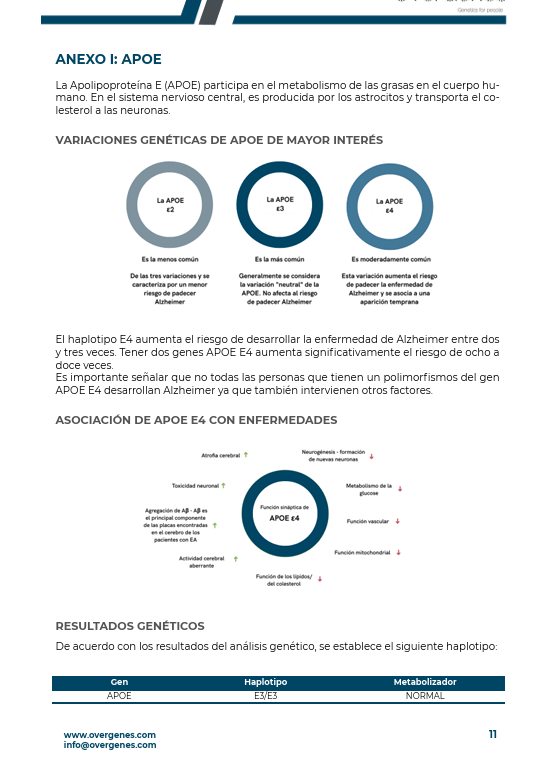
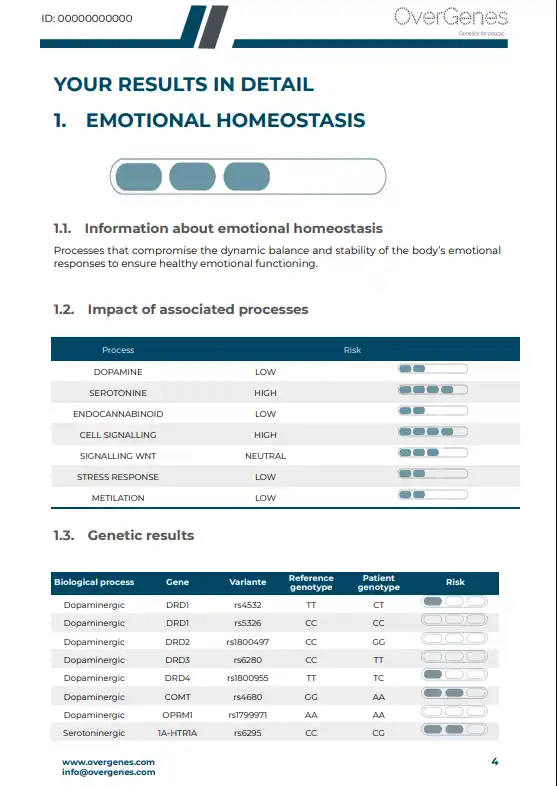
It analyzes genetic variants related to 9 biological processes that influence brain function and mood: dopamine, serotonin, GABA, endocannabinoids, cell signaling, Wnt signaling, stress response, neuroinflammation and methylation.
It makes it possible to understand the genetic predisposition to alterations in behavioral regulation, addictive behaviors, alterations in emotional homeostasis and neuroinflammation. This information helps to better understand mental health and make more informed decisions.
At anyone who wants to better understand their genetic predisposition in relation to emotional wellbeing, brain function and stress response. It is also useful for mental health professionals who want to integrate genetic information into clinical practice.
Genetics influences how neurotransmitters (dopamine, serotonin, GABA) are produced, transported and metabolized, which affects mood, stress response, sleep, motivation and emotional wellbeing. Knowing this predisposition helps to better understand individual differences.
No. MyNeuro provides complementary genetic information that can be useful as an additional tool, but it doesn’t diagnose or replace clinical evaluation by a mental health professional.
No. The genetic profile doesn’t change throughout life, so the test is performed only once.
9 biological processes analyzed to learn about your predisposition in neurotransmission, stress response and mental health.