General
MyPharma General
110+
drugs analyzed
The most complete panel. Covers the most common and widely used drugs across 24 therapeutic categories.


MyPharma analyzes your pharmacogenetic profile to identify which drugs work best according to your genetics, personalize dosing, and reduce the risk of adverse effects.

Pharmacogenetics studies genetic variability in relation to drug response. Knowing this information makes it possible to determine the most suitable drug for each patient and personalize the dosage.
This becomes especially relevant in situations where, due to the severity of the disease, it is crucial to ensure treatment effectiveness and minimize the risk of toxicity.
Overgenes offers different MyPharma panels, each analyzing specific groups of drugs adapted to different therapeutic areas.
The most complete panel. Covers the most common and widely used drugs across 24 therapeutic categories.
Specialized in chronic pain. NSAIDs, opioids, anesthetics, anxiolytics and pain management adjuvants.
Drugs for mental health. Antidepressants, antipsychotics, antiepileptics, anxiolytics, ADHD and dementia.
Oncology treatment. Chemotherapy, targeted therapies, immunotherapy and management of adverse effects.
Each MyPharma panel covers specific groups of medications. Check the table to identify the most suitable panel based on the patient’s treatment.
| Therapeutic category | General | Pain | Neuro | Onco |
|---|---|---|---|---|
| Pain and anesthesia | ||||
| NSAIDs | ||||
| Opioids | ||||
| Anesthetics | ||||
| Antipyretics | ||||
| Neurology and psychiatry | ||||
| Antidepressants | ||||
| Antipsychotics | ||||
| Antiepileptics | ||||
| Anxiolytics | ||||
| ADHD | ||||
| Dementia | ||||
| Smoking cessation | ||||
| Cardiovascular and metabolism | ||||
| Anticoagulants | ||||
| Antiplatelet agents | ||||
| Antihypertensives | ||||
| Beta-blockers | ||||
| Antiarrhythmics | ||||
| Statins | ||||
| Antidiabetics | ||||
| Diuretics | ||||
| Digestive, immunology and other | ||||
| Proton pump inhibitors | ||||
| Immunosuppressants | ||||
| Anti-infectives | ||||
| Corticosteroids | ||||
| Antiemetics | ||||
| Respiratory | ||||
| Antimigraine | ||||
| Oncology | ||||
| Chemotherapy and targeted therapies | ||||
| Total drugs analyzed | 110+ | 75 | 70+ | 25 |
A simple, non-invasive process designed to fit into clinical practice.
The user receives instructions to correctly collect the sample.
DNA is obtained through a saliva sample, painlessly and non-invasively.
The sample is processed to analyze genetic variants involved in drug response.
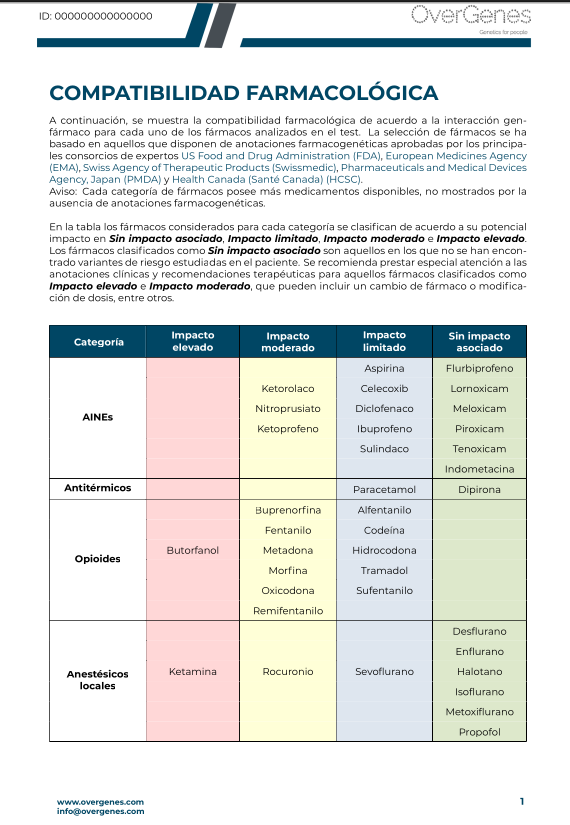
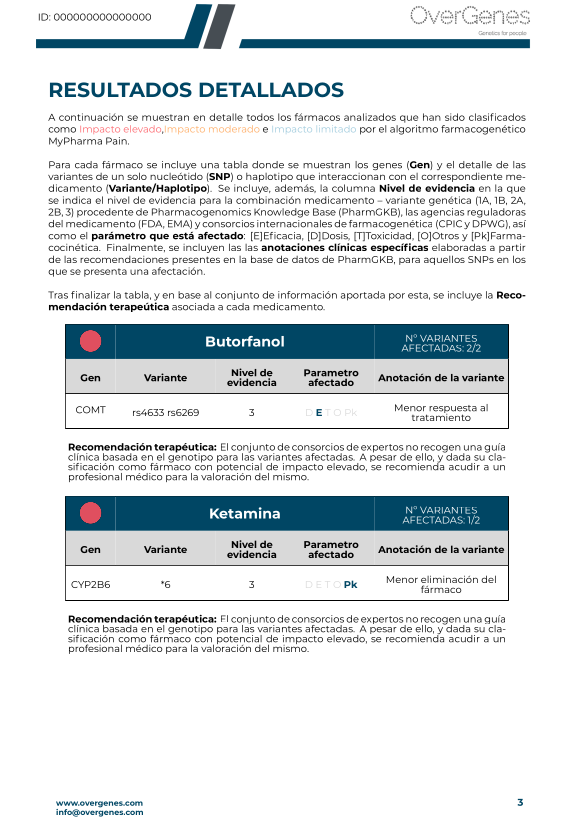
The report details drug compatibility, clinical annotations and therapeutic recommendations.
The report provides the specialist with a high-value, easy-to-interpret clinical tool for optimizing therapeutic decisions on a personalized basis.
The MyPharma tests integrate data from the leading international pharmacogenetics databases and consortia to offer recommendations with the highest level of evidence.
The largest publicly accessible pharmacogenomics database, funded by the NIH and founded at Stanford.
Clinical guidelines from the leading international pharmacogenetics consortia for decision-making.
Regulatory annotations from the American and European medicines agencies incorporated into the analysis.
Microarray technology that analyzes ~700,000 genetic variants with reliable, reproducible results.
Pharmacogenetics studies how each person’s genetic variants influence their response to medications. It allows the doctor to select the most suitable drug, personalize the dosage, and anticipate the risk of adverse effects before starting treatment.
Each panel specializes in a specific therapeutic area:
No. Your genetic profile doesn’t change throughout life. The test result remains valid permanently and can be consulted every time a new treatment is prescribed.
The sample is obtained non-invasively through saliva. It doesn’t require blood collection, is painless and suitable for any age.
The results of the pharmacogenetic test should be interpreted by a medical professional. The report provides a tool to support therapeutic decision-making, but the final decision always rests with the prescribing physician based on a complete evaluation of the patient.
The report includes the drug compatibility of each medication analyzed (classified by impact level), the genetic variants identified along with their level of evidence, specific clinical annotations, and therapeutic recommendations based on the CPIC, DPWG, FDA and EMA guidelines.
Results are available within an approximate maximum of 20 business days after the sample is received at the lab.
Contact our team for more information about the MyPharma tests or to request a personalized pharmacogenetic study.