


Discover your genetic predisposition to periodontitis
MyOral Genetics analyzes variants related to inflammatory response and oxidative stress to assess individual susceptibility to periodontitis and support more personalized periodontal prevention.
The same exposure does not cause the same response in every patient
Periodontitis is a multifactorial disease. In addition to bacterial load and environmental factors, individual biological response may influence susceptibility to and progression of the disease.
MyOral Genetics analyzes variants related to the regulation of inflammation and oxidative balance, providing additional information to help understand why some patients may develop a more pronounced periodontal response.
The result does not diagnose periodontitis: it provides information about genetic predisposition that should be integrated with the healthcare professional’s clinical assessment.
Two biological pathways related to periodontal response
The test analyzes genetic variants involved in processes that may modulate the body’s response to periodontal bacterial challenge.
Inflammatory response
Analyzes variants related to the regulation of inflammatory mediators involved in the immune response to periodontal microorganisms.
- Response intensity: predisposition to a more or less pronounced inflammatory response
- Immune regulation: balance between pro-inflammatory and anti-inflammatory signals
- Tissue damage: biological mechanisms related to periodontal progression
Oxidative stress and antioxidant defense
Analyzes variants that may influence the body’s ability to neutralize reactive species and limit oxidative damage associated with inflammatory processes.
- Antioxidant defense: genetic efficiency of antioxidant enzyme systems
- Cellular detoxification: ability to process reactive compounds
- Oxidative balance: individual susceptibility to oxidative stress
Genetic information applied to periodontal health
MyOral Genetics analyzes variants related to inflammation, immune response, oxidative metabolism and other biological processes involved in periodontal susceptibility.
Inflammation and immune response
Mediators and regulation of inflammatory response- IL1 · IL6 · IL10
- TNF
- CRP
- Other related markers
Oxidative stress and metabolism
Antioxidant defense and associated cellular mechanisms- SOD · CAT · GPX
- GST
- NQO1
- Other related markers
An additional layer of information to personalize prevention
Genetics alone does not determine whether periodontitis will develop, but it can help identify patients with increased biological susceptibility.
Integrating this information with clinical examination, medical history, smoking, oral hygiene, microbiology and other risk factors enables more individualized follow-up.
What can it provide to the healthcare professional?
- Identify individual genetic predisposition
- Support more precise risk stratification
- Personalize periodontal maintenance frequency
- Strengthen preventive measures in susceptible patients
- Adapt medium- and long-term follow-up
- Complement clinical and microbiological information
Particularly useful when anticipating periodontal risk is important
It can be used as a complementary tool for patients undergoing prevention, periodontal treatment or follow-up.
Periodontal history or risk
Patients with a family history, risk factors or clinical signs requiring a more individualized preventive assessment.
Periodontal maintenance
Treated patients for whom the frequency and intensity of follow-up may need to be personalized.
Implant dentistry
As complementary information to assess biological susceptibility and strengthen preventive strategies in the peri-implant environment.
From DNA to more personalized periodontal prevention
Sample collection
An oral sample is collected quickly, easily and painlessly.
Genetic analysis
Variants related to inflammation, immune response and oxidative stress are analyzed.
Personalized report
The report summarizes genetic predisposition and the biological processes analyzed.
Clinical application
The healthcare professional integrates the results with clinical information to adapt prevention, maintenance and follow-up.
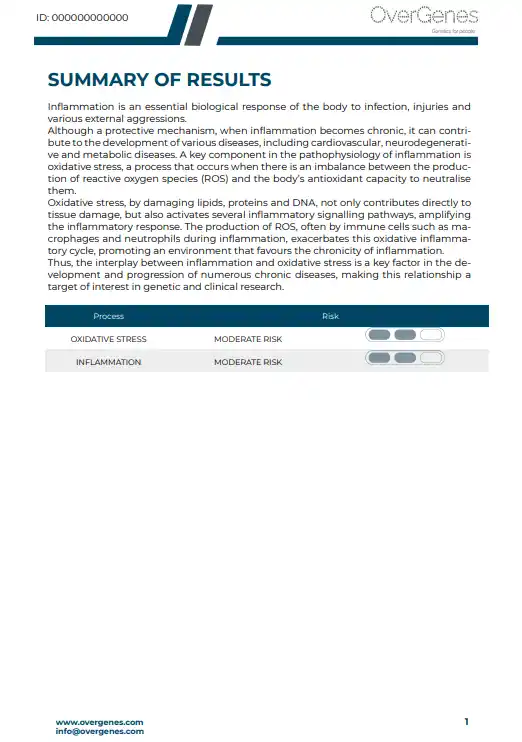
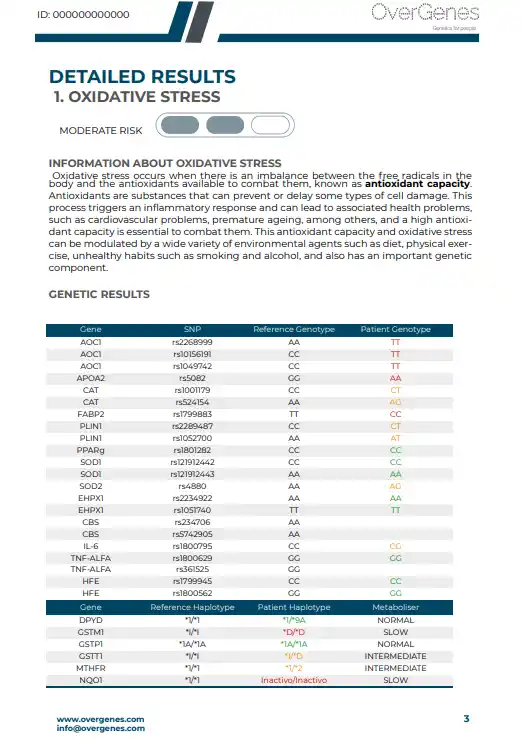
Genetic information interpreted for periodontal application
The report presents the results in a structured format to facilitate interpretation by the healthcare professional.
- Results by genetic variants and biological processes
- Interpretation of individual predisposition
- Contextualization of inflammation and oxidative stress
- Supporting information for prevention and follow-up
Frequently asked questions about MyOral Genetics
What does MyOral Genetics analyze?
It analyzes genetic variants related to inflammatory response, immune response and oxidative stress to provide information about individual predisposition to periodontal disease.
Does the result indicate whether I will develop periodontitis?
No. The result indicates genetic predisposition, not a diagnosis or certainty that the disease will develop. Periodontitis is multifactorial and also depends on microbiological, environmental, behavioral and clinical factors.
Does it replace a periodontal examination or microbiological test?
No. It is a complementary tool. Genetics provides information about host susceptibility, while clinical examination and microbiological analysis assess the patient’s current periodontal status from different perspectives.
Can it be useful in implant dentistry?
It can provide complementary information about the patient’s inflammatory predisposition and help the healthcare professional strengthen preventive and peri-implant follow-up strategies.
Does the test need to be repeated?
No. The genetic profile remains stable throughout life, so the analysis only needs to be performed once.
Is the test invasive?
No. The sample is collected easily and painlessly using an oral sample.
Discover the genetic predisposition behind periodontal response
A complementary tool to personalize periodontal prevention, maintenance and follow-up according to each patient’s biology.